
A new joint report by the World Health Organization and the World Bank Group shows that most countries have made progress toward Universal Health Coverage (UHC) over the past two decades. However, major challenges remain in ensuring equitable access to essential health services and protecting households from financial hardship. According to the UHC Global Monitoring Report 2025, the global Service Coverage Index (SCI) increased from 54 in 2000 to 71 in 2023, reflecting improvements in access to essential health services worldwide. At the same time, the share of people experiencing financial hardship due to large out-of-pocket health spending declined from 34% in 2000 to 26% in 2022. Despite these gains, significant gaps persist. The report estimates that 4.6 billion people still lack access to essential health services, while 2.1 billion people experience financial hardship when accessing healthcare. Among them, 1.6 billion people are either pushed into poverty or driven deeper into poverty due to health expenses. Out-of-pocket spending on medicines remains a major driver of financial hardship. In three-quarters of countries with available data, medicines account for at least 55% of household out-of-pocket health spending, and for poorer populations this share can reach around 60%. Without accelerated progress, the global Service Coverage Index is projected to reach only 74 out of 100 by 2030, leaving nearly one in four people worldwide still facing financial hardship related to healthcare at the end of the Sustainable Development Goals (SDG) period. The report also highlights widening inequalities in access to healthcare. In 2022, three out of four people among the poorest populations experienced financial hardship due to health costs, compared with fewer than one in twenty-five among the richest groups. The findings emphasize the urgent need for stronger political commitment and policy action. The report calls on countries to expand public investment in health systems, reduce out-of-pocket spending on medicines, strengthen primary healthcare, and accelerate access to services for non-communicable diseases. For countries across the Middle East and North Africa (MENA), these insights are particularly relevant as many governments continue to implement health system reforms and expand national health insurance programs aimed at achieving universal health coverage. |
Other News

Yemen Strengthens Outbreak Detection Through Field Epidemiology Training
August 20, 2026
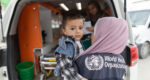
WHO Marks World Humanitarian Day, Calls for Protection of Health Workers in the Region
August 19, 2026

Egypt’s Universal Health Insurance Rollout Backed by New AFD Financing
August 11, 2026